






Many organisations have taken their first steps with AI. Pilots show what is possible, but the real challenge comes after: how do you move from experiment to structural adoption?

AI initiatives rarely fail because of technology. They fail due to missing preconditions such as governance, data quality, security and cost control.
AI in IT: where the value lies
Within IT, we see AI adding value on multiple fronts, from process optimisation to decision support. A notable development is its impact on software development itself. AI-driven development, using tools such as Claude and Codex, makes it possible to generate code, tests and documentation faster. Developers can iterate more quickly and spend less time on repetitive tasks.
Especially in the early stages of development, this delivers immediate productivity gains. That makes it a tangible and fast-growing application of AI within IT.
“Writing code faster is not the same as delivering faster.”

The nuance: writing code faster is not the same as delivering faster
What actually happens is that AI increases the local efficiency of development, while the end-to-end flow remains the same. According to classic bottleneck logic (Theory of Constraints), the constraint automatically shifts to other parts of the chain.
Those bottlenecks typically lie in governance and decision-making: architecture reviews, security checks, test acceptance and stakeholder alignment. These steps are often sequential and dependent on scarce expertise.
The result is a mismatch. Output at the front increases, while processing capacity at the back stays the same. AI makes an existing problem visible: many delivery chains are built for productivity rather than flow.

A new playing field: costs become variable
AI tools appear cheap in the experimental phase, but as usage grows, the cost structure changes fundamentally. Generative AI is not a one-off investment, it is an ongoing cost.
Since 2026, providers such as GitHub Copilot, Claude and Codex have been moving to usage-based pricing. One well-known example is a Microsoft initiative where the available AI budget was consumed within a few months due to usage-based costs.
A business case for AI only works if this shift is made explicit. Without that insight, the business case often disappoints at scale.
“Developing faster only creates value if costs and scalability remain under control.”
Data, security and auditability as a prerequisite
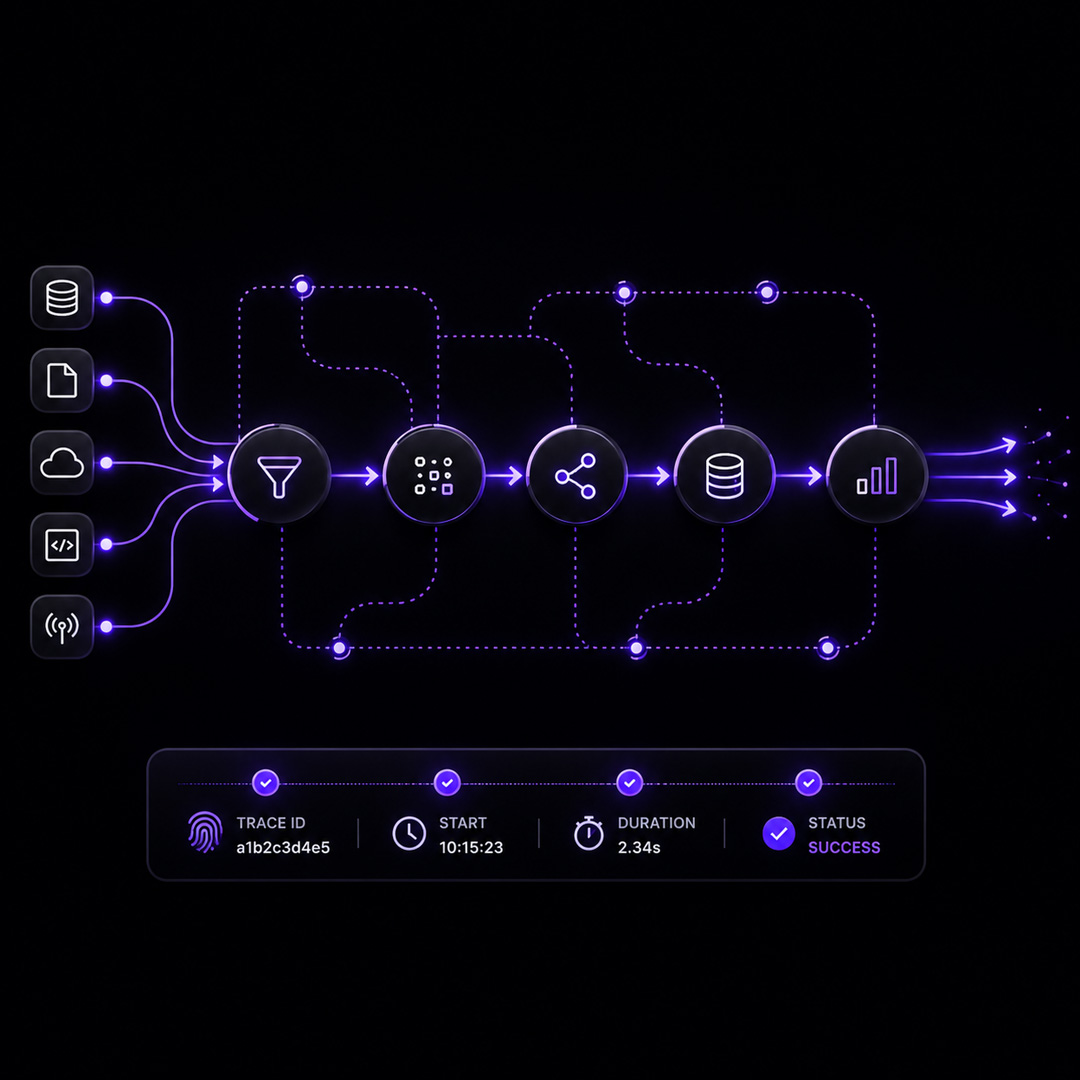
AI not only expands capabilities, it also increases dependency on data. Without reliable, consistent and contextually accurate data, output remains limited and, more importantly, unpredictable.
In an enterprise context, every AI outcome must be traceable: which data was used, which steps were taken and under which assumptions a result was produced.
Organisations that get this right are not building isolated AI use cases, they are building a controllable and scalable capability.
Where AI-driven development works best
Greenfield
In new environments, control is greatest: architecture, standards and ways of working can be set up from the start to support AI-assisted development, allowing speed and quality to go hand in hand.
Rebuilds & modernisation
The functional scope is known while the technical implementation can be redesigned. That enables targeted acceleration without the constraints of the past.
Existing platforms
Dependencies, legacy and technical debt limit room to manoeuvre. Structural acceleration also requires simplification and redesign of the landscape.
Conclusion
The move from AI experiment to structural adoption is not a straightforward process. Technology alone is not enough. Successful application requires alignment between tooling, governance, data, security and cost management.
The speed of code generation is increasing rapidly, but real value only emerges when the rest of the organisation is ready for it. The question is therefore not only what AI can do, but how your organisation can deploy it responsibly and at scale.
Ready for the next step?
Finaps helps organisations move from AI experiment to structural impact
Depending on where you are in your journey, we offer three focused services.